

| عربي | Français | |
![]() |
|
The Library and Collections |
|
|
› Collections of Manuscripts and lithographs › Services |
››› The Library
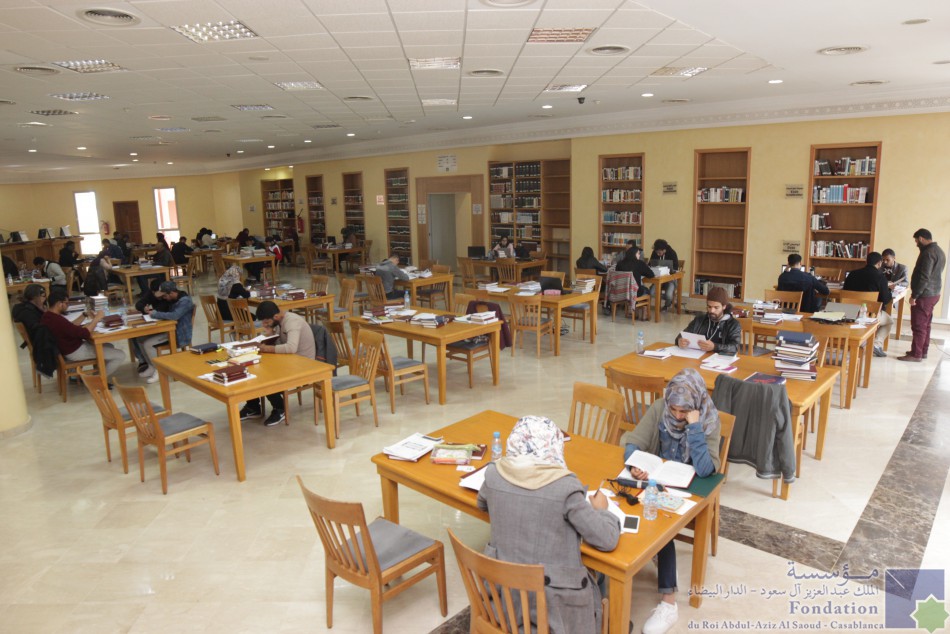
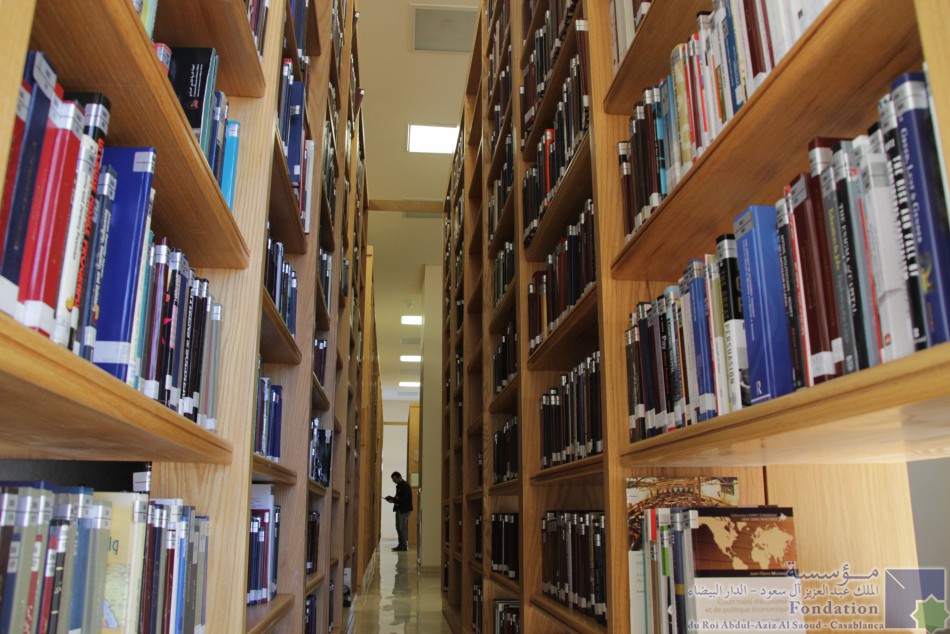
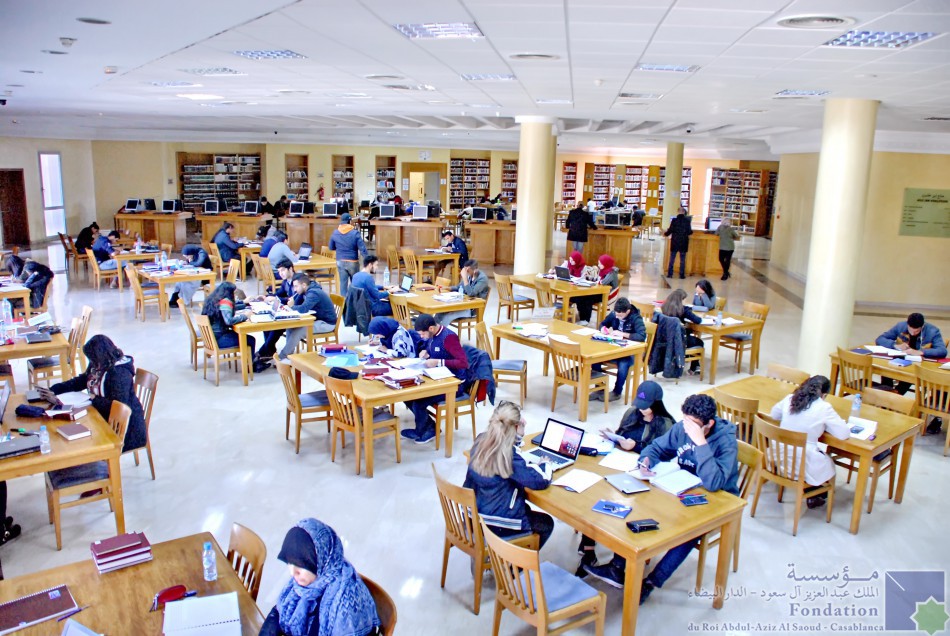
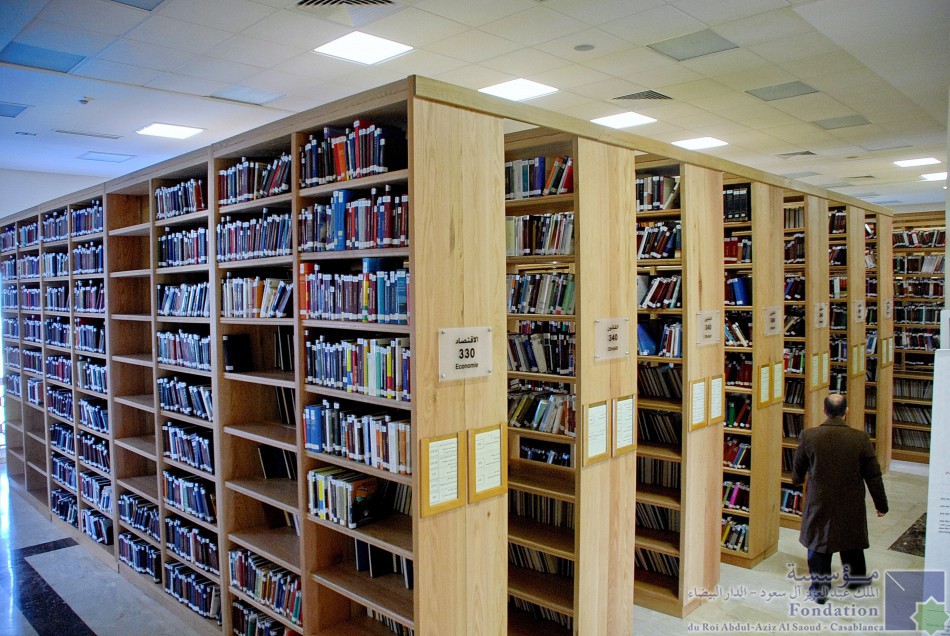
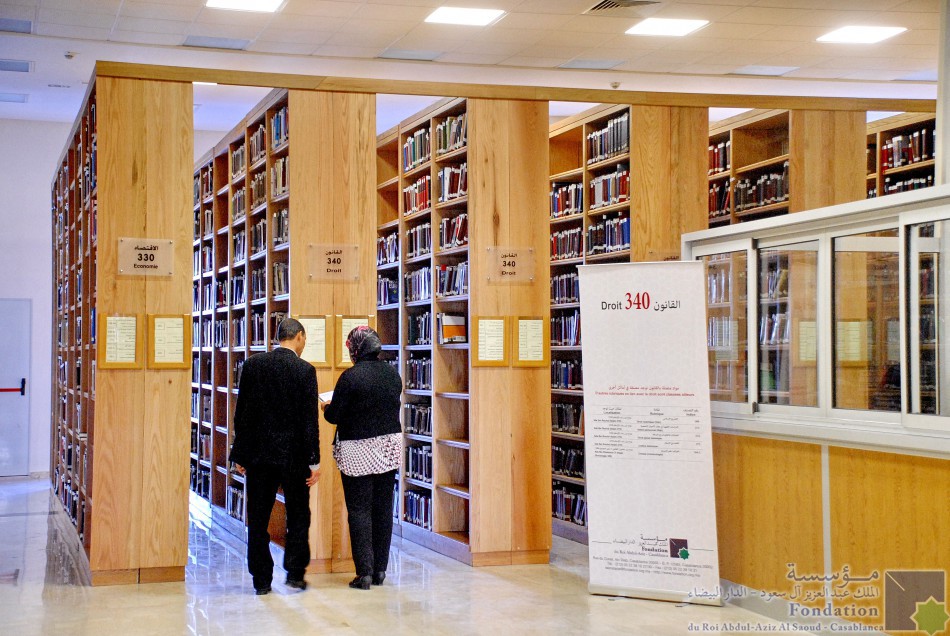
The following up by the library’s departments of the global academic and scientific production in its fields of interest and supplying to its readers the best documents is, indeed, a good approach. The Administrative Board has, nevertheless, seen it fit to adopt a new policy of collections establishment pointing at making the library the main reference in studies relative to the Maghreb and the Muslim West in the past and in the present. Therefore, the Foundation pursued at the beginning of 1989 a procedure consisting in acquiring the maximum of documents pertaining to this space, literary works inclusive. And since the library is designed for the academia, researchers, university students and professionals, the Foundation does not purchase textbooks and global literary works, etc. (see the acquisition charter) Thereby, the Foundation’s library has become a reference to academicians and researchers who wants to refer not only to documents on the Maghrebian space, the Muslim West and the Arab Islamic World, but also to the latest theoretical and methodological publications in the fields of Human and Social Sciences.
In order to be in phase with the continuous evolution of information and communication technologies especially in the field of libraries and information management, the Foundation library’s management system continued to develop remarkably across four stages:
Purchasing MINISIS was the Foundation's first experience in terms of automating the different operations of cataloging, indexing and classifying. The Foundation opted for this system in view of its ability to process the Arabic sign. MINISIS allowed the Foundation to constitute its first monographs and periodicals database called Mawsu’a. It equally allowed the establishment of a second database specialized in studies relevant to the Maghreb and its geographical, historical and cultural environment: Ibn Ruchd. However, the weaknesses of this system, which indeed paid many services to the Foundation during the first years of its setting up, started to hinder the Foundation’s activities as time went on especially with respect to budget management, use of the databases, the quick access to bibliographical information, etc. Thus, the Foundation was urged to think of an alternative.
The alternative system was supposed to meet a number of principles:
While waiting to receive a satisfactory bid, the Foundation opted for some temporary solutions. It resorted to the databases engine SQL Server installed on Windows NT and to Access database and Visual Basic as client stations.
During the first five years of this century, the Foundation entered a third stage which consists in focusing on enriching and improving the databases: establishing authority files, corporate author files and files for collections and publishers. The Foundation also reprogrammed Ibn Rushd thesaurus and programmed DDC tools. These achievements were crowned by the launching of the Website of King Abdul-Aziz Al Saoud Foundation for Islamic Studies and Human Sciences endowed with an online catalog (OPAC) and the edition of two Cd-Roms; one in 2005 entitled Maghreb Index, devoted to studies relative to the Maghreb and its geographical, historical and cultural environment, and another in 2007 devoted to Arabic translations entitled: Translation of Human and Social Sciences in Contemporary Arab World. It was, then, necessary to opt for one of two solutions: to proceed with the policy of internal development, even if it requires resorting to a company specialized in softwares, which will grant the Foundation an autonomy vis-à-vis software producers and will guarantee the continuity of its services, or to help itself with the softwares available in the market and which offer the latest inventions of the information and communication technology, it will therefore need to prepare precise specifications.
After studying the proposals received from editors and software companies, experiencing some of them internally and externally and following up their evolution, the Foundation decided to acquire the 8th edition of Horizon information system which meets, to some extent, its expectations. The company created out of the merger of the two competitors that used to produce Horizon and Unicorn, integrated the main strengths of both systems in one called Symphony. To be effectively in line with the project of exchange which is the Unified Arabic Index and to which the Foundation has been contributing from the outset, it chose the MARC 21 exchange format. It is still adopting the ISBD norms waiting for a general coordination between this latter and the AACR norms. In order for the Foundation to follow the proliferation of electronic periodicals and databases devoted to periodicals, it subscribed through Internet to Academic Search Premier Database, accessible via EBSCO information agency. This database contains full texts of a great number of academic periodicals covering many disciplines: History, Sociology, Anthropology, Psychology, Philosophy, Economics, Law, Theology, Education, Linguistics, Literature, etc. The library’s adherents can access to it for free inside the Foundation premises. The Foundation entrusted the task of digitization to a private company. Up to December 31st, 2008, 546 collections were covered which equals 32 396 pages. |